Dry, oily, or sensitive skin? Guess what, it’s Skin Health, Not Skin Type™.
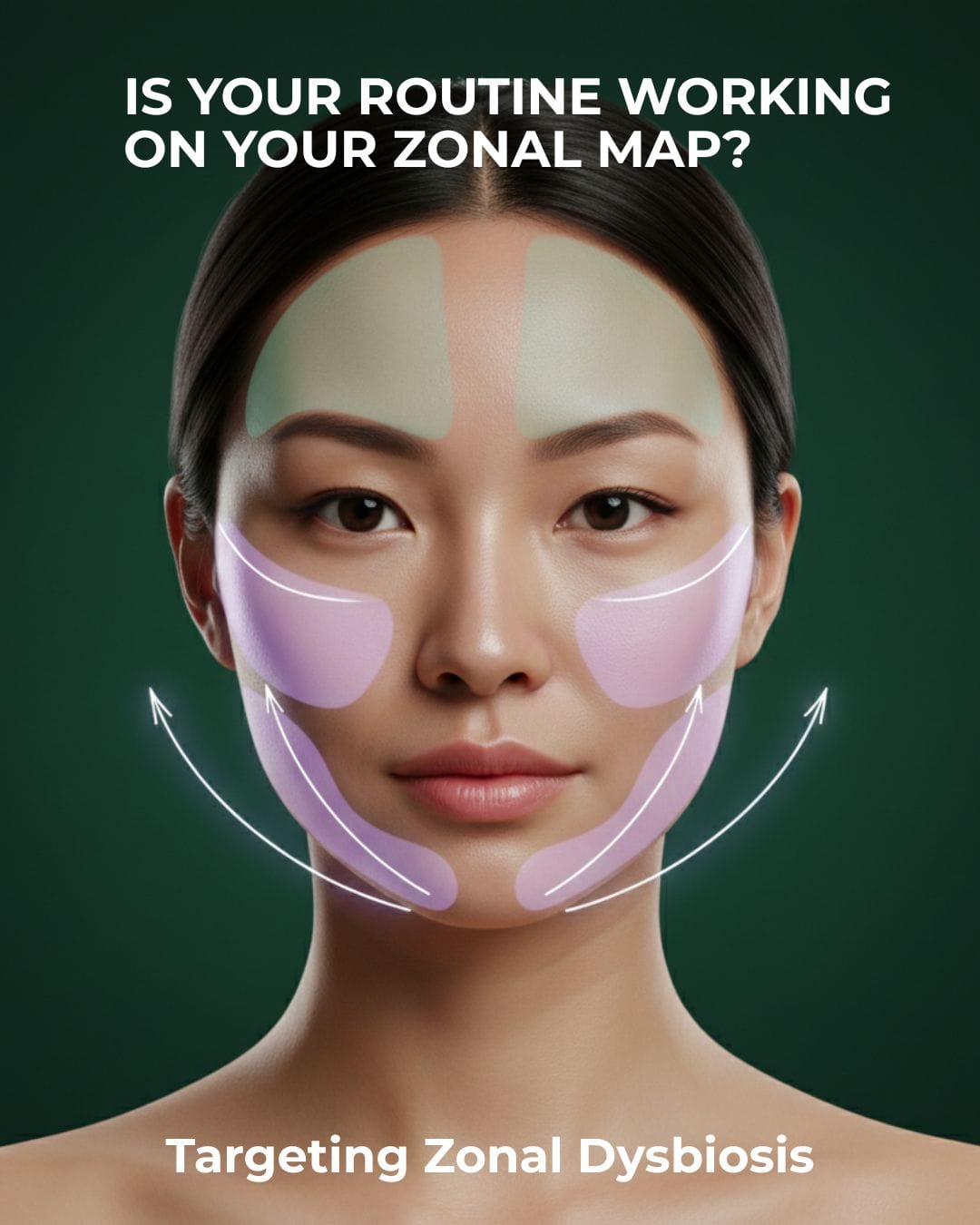
The era of customized skincare based on traditional skin typing is over. At the Dr.TWL Asian Skin Research Institute, we are moving into the cutting edge of personalized beauty, shifting toward targeted protocols based on original zonal dysbiosis research published in leading global journals, including the Journal of the American Academy of Dermatology (JAAD) and the International Journal of Dermatology—powered by AI algorithms.
Beyond Skin Typing: The Ecosystem Approach
Our research proves that different areas of your face act as separate ecosystems that adapt uniquely to environmental stressors. We are changing the narrative using dermatologist-developed, AI-powered algorithms that back our original ethnobotanical research at our Guangdong bioengineering lab.
A cornerstone of this research is the “O-Zone” of the face, a term first coined in Dr. Teo Wan Lin’s 2021 white paper in the JAAD. This specific area often overlaps with complex conditions such as:
- Hormonal Acne: Frequently manifesting in the lower third of the face due to androgen sensitivity.
- Rosacea: Where vascular hyper-reactivity can coexist with a disrupted skin barrier.
- Perioral Dermatitis: A condition highly sensitive to topical products and environmental changes, directly impacting the skin microclimate.
Our Core Research Focus Areas: Engineering Global Skin Solutions with Eastern Ethnobotany and Modern Dermatology
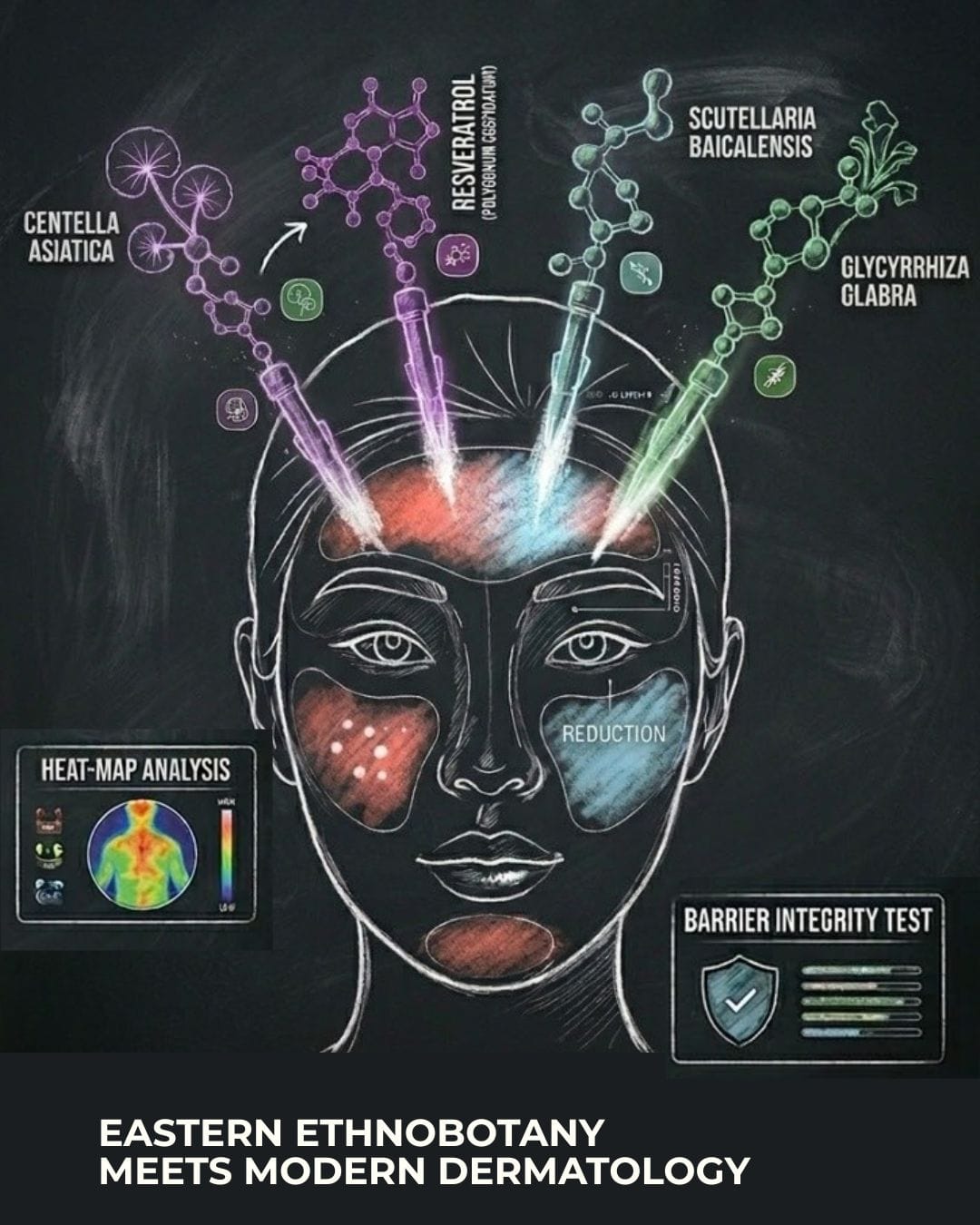
We are currently decoding Zonal Dysbiosis through a dual lens: the ancient wisdom of ethnobotany and the precision of modern peptides. Our Guangdong facility focuses on how these actives interact with the specific cutaneous biology, beginning first with the Asian skin types, which often presents with higher transepidermal water loss (TEWL) and a more reactive pigmentary system—as the foundation for global skin solutions.
1. Ethnobotanical Harmonization: Balancing the Sebum Landscape

We utilize high-potency extracts—including Saw Palmetto, Argan, and Sesame—to specifically target and inhibit the 5-alpha reductase enzyme. This enzyme is the primary driver of excess oil production. By inhibiting it topically, we balance sebum production at the source, preventing the lipid-heavy environments that trigger microbial dysbiosis in the T-zone.
2. Oxidative Shielding: Neutralizing Free Radical Cascades
By deploying targeted antioxidants, we create a molecular shield that neutralizes free radicals before they can degrade the skin barrier. This is not a one-size-fits-all antioxidant approach; our AI algorithms determine the specific concentration of Resveratrol and polyphenols needed to preserve barrier integrity in high-pollution, high-humidity urban environments.

3. Phyto-Botanical Synergy: Stabilizing the Microbiome
Our lab leverages the synergistic power of Centella Asiatica and Glycyrrhiza Glabra. These compounds work in tandem to:
- Soothe Localized Inflammation: Reducing the cytokine response in reactive zones.
- Stabilize Microbial Diversity: Encouraging the growth of beneficial flora while inhibiting pathogens like C. acnes.
- Maintain Barrier Integrity: Ensuring the physical “wall” of the skin remains impenetrable to irritants.
The Role of AI in Our Research Protocols for Cutting Edge Personalised Bio-Dermatology Solutions
As the leading dermatologist-developed Eastern ethnobotanical focused cosmeceutical brand, we leverage AI to power our research algorithms to tackle the infinite variables of skin health.. Our AI-powered algorithms analyze data points from thousands of Asian skin profiles to predict how certain ethnobotanical combinations will behave on the O-Zone, versus the forehead.
You’ve heard before that skincare should not be a game of trial and error, and this time we’re taking it a step further. By understanding the biological map of your skin, you can transition from reactionary treatments to an evidence-based routine engineered for your specific cutaneous profile.
The “O-Zone” Clinical Glossary
| Term | Clinical Definition | Impact on Asian Skin |
|---|---|---|
| Zonal Dysbiosis | A localized imbalance of the skin’s microbial ecosystem. | Causes “patchy” skin issues where one area is oily/acne-prone while another is dry. |
| O-Zone | The topographical area encompassing the malar and mandibular arches (lower face). | High-impact area for hormonal acne and rosacea, exacerbated by mask-wearing or high humidity. |
| 5-Alpha Reductase | An enzyme responsible for converting hormones into potent sebum-triggering metabolites. | Targeted by Saw Palmetto to reduce excess oil in the T-Zone without stripping the skin. |
| Ethnobotany | The study of a region’s plants and their practical applications through traditional knowledge. | Provides the “Bio-Dermatology” blueprint for using plant-derived actives like Centella Asiatica. |
Asian Skin Research
The research conducted by the Dr.TWL Asian Skin Research Institute is grounded in peer-reviewed clinical data and specialized laboratory studies. Below are the key scientific links and foundational research supporting your targeted skincare protocols.
Ethnobotanical Efficacy and Enzyme Inhibition
Original research focuses on non-competitive inhibition of the 5-alpha reductase enzyme, a key driver of sebum dysregulation in the T-zone and O-zone of the face.
- Mechanism of Action: Lipidosterolic extracts like Saw Palmetto (Serenoa repens) inhibit both type I and II 5-alpha-reductase via allosteric (non-competitive) mechanisms.
- Clinical Relevance: This process prevents the conversion of testosterone into its active metabolite, dihydrotestosterone (DHT), which is linked to androgen-dependent conditions like hormonal acne.
- Source Study: The Safety and Efficacy of a Novel Saw Palmetto Extract for Promoting Hair Growth (Details mechanism of enzyme inhibition).
- Source Study: Determination of the potency of a novel saw palmetto supercritical CO2 extract for 5α-reductase inhibition.
Phyto-Botanical Synergy in Asian Skin
The Asian Skin Research Institute’s bio-dermatology framework emphasizes the use of Centella Asiatica to stabilize the reactive Asian skin phenotype through multi-pathway efficacy.
- Multi-Pathway Benefits: Research confirms that Centella asiatica extracts provide significant antioxidant, anti-inflammatory, and dermal-regenerative activities.
- Barrier Restoration: Topical application has been shown to decrease transepidermal water loss (TEWL) and increase skin surface hydration, which is essential for managing the sensitive Asian phenotype.
- Source Study: Moisturizing and Anti-inflammatory Properties of Cosmetic Formulations Containing Centella asiatica Extract.
- Source Study: Pharmacological Effects of Centella asiatica on Skin Diseases: Evidence and Possible Mechanisms.
The Foundations of Zonal Dysbiosis (Dr. Teo Wan Lin)
The concept of Zonal Dysbiosis and the clinical definition of the “O-Zone” were first established in these high-impact publications:
- Defining the O-Zone (PubMed Source: Diagnostic and management considerations for “maskne” in the era of COVID-19. J Am Acad Dermatol (JAAD), 2021.)
- Pathophysiology of Microbiome Dysbiosis (PubMed Source: The “Maskne” microbiome – pathophysiology and therapeutics. Int J Dermatol, 2021.)