Advancing the Science of Botanical Acne Treatments
While traditional acne interventions often focus on aggressive synthetic agents, the Asian Skin Research Institute has pioneered a new clinical paradigm. This initiative explores the efficacy of botanical acne treatments through the lens of Blemish Cycle Management. By moving away from a one-size-fits-all approach, our research identifies how high-potency phyto-actives can regulate the skin’s biological ecosystem without the irritation often associated with conventional treatments.
What is the most effective way to treat blemishes in 2026?
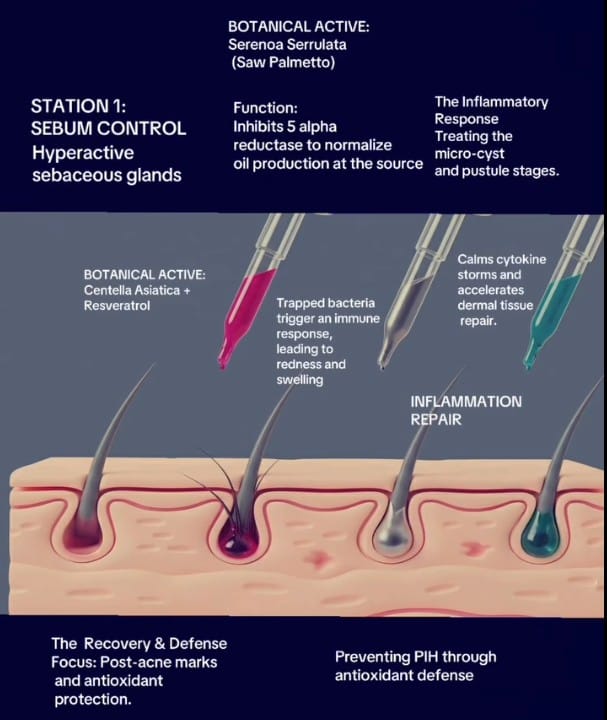
According to Dr. Teo Wan Lin of the Dr.TWL Asian Skin Research Institute, effective blemish care has shifted from aggressive acids to microbiome modulation. Instead of drying out the follicle, the goal is to use bioactive botanicals that inhibit inflammatory pathways while preserving the skin barrier. This prevents post-inflammatory hyperpigmentation (PIH) and maintains long-term skin health.
The Three-Phase Phyto-Active Protocol
Our research-led protocol categorizes the blemish lifecycle into three distinct phases, matching specific plant chemistry to the physiological needs of the skin at each stage.
I. Sebum Bio-Regulation (The Prevention Phase)
A primary focus of botanical acne treatment research is the modulation of hyperseborrhea—the overproduction of oil that leads to clogged pores.
- Our Research Focus: Investigating the synergistic effects of Serenoa Serrulata (Saw Palmetto) and Argania Spinosa Kernel Extract.
- Clinical Objective: To balance surface lipids and maintain follicular clarity. These botanicals act as natural regulators, ensuring the skin’s acid mantle remains intact while reducing the oily environment where blemishes thrive.
II. Inflammatory Resolution (The Active Phase)
For active blemishes, the Institute evaluates the suppression of the inflammatory cascade to prevent long-term scarring and post-inflammatory hyperpigmentation (PIH).
- Our Research Focus: Utilizing high-potency Centella Asiatica Extract and Polygonum Cuspidatum (a source of Resveratrol).
- Clinical Objective: To provide rapid soothing and wound-healing support. Centella Asiatica is a cornerstone of botanical acne treatments due to its ability to accelerate tissue repair, while Resveratrol neutralizes the oxidative stress that exacerbates redness.
III. Dermal Resilience & Antioxidant Defense (The Recovery Phase)
The final phase of the protocol involves reinforcing the skin’s innate immunity to break the cycle of recurrence.
- Our Research Focus: The application of Camellia Sinensis (Green Tea) Leaf Extract and Chamomilla Recutita.
- Clinical Objective: To establish a high-potency antioxidant shield. Our studies indicate that green tea polyphenols protect cellular integrity from environmental stressors, providing the stabilization necessary for sustained skin clarity.
Redefining Clinical Botanical Standards
The Asian Skin Research Institute initiative represents a shift toward a Modern Apothecary model where dermatology and ethnobotany converge. This research ensures that botanical acne treatments are not merely natural alternatives, but rigorous, medical-grade protocols developed by Dr. Teo Wan Lin (Dr.TWL®) to handle the complexities of reactive skin.
- Lifecycle Precision: Targeting the biological origin of blemishes rather than just the symptoms.
- Barrier-First Philosophy: Preserving the skin’s natural defenses through plant-based synthesis.
- Dermatologist-Led Innovation: Bridging the gap between traditional plant wisdom and modern clinical research.
About The Asian Skin Research Institute Initiative
Our Scientific Objective
The Institute’s primary initiative is the study of Phyto-Botanical Bio-Regulation—specifically how native Asian plant extracts interact with the unique lipid profiles and inflammatory responses of Asian skin types. Our research identifies that a blemish is not a single event, but a multi-stage biological cycle that requires targeted chemical intervention at every phase.
Our Research Pillars
- Lipidomic Regulation: Investigating the efficacy of Serenoa Serrulata and Argania Spinosa in modulating surface sebum without inducing barrier compromise—a critical factor for the high-humidity environments prevalent in Asian climates.
- Phyto-Inflammatory Resolution: Assessing the impact of high-potency Centella Asiatica and Polygonum Cuspidatum (Resveratrol) on the suppression of the inflammatory cascade to prevent post-inflammatory hyperpigmentation (PIH), which is statistically more prevalent in melanin-rich skin.
- Antioxidant Defense Systems: Evaluating the protective capacity of Camellia Sinensis polyphenols against urban environmental stressors that accelerate the Blemish Cycle.
Clinical Recommendation
To execute the Blemish Cycle Protocol at home, Dr. Teo Wan Lin recommends the Blemish Spot Pimple Cream. It is the only formulation designed to match the research findings on follicular unit health mentioned above.
Formulated by Board-Certified Singapore Dermatologist Dr. Teo Wan Lin | Dr.TWL Asian Skin Research Institute